
The Ultimate Guide to Rings: Symbolism, Styles, and Selection
Rings are perhaps the most significant pieces of jewelry in human history. More than just decorative ornaments, they serve as powerful symbols of commitment, status, achievement, and personal style. From the simple band exchanged at a wedding to the intricate cocktail ring worn at a gala, these circular treasures hold a unique place in our culture and our hearts. In this comprehensive guide, we explore the world of rings, covering everything from their historical origins to modern trends and essential buying tips.
The Rich History and Symbolism of Rings
The practice of wearing rings dates back thousands of years. Ancient Egyptians are often credited with the origin of the wedding ring, viewing the circle as a symbol of eternity—a shape with no beginning and no end. They believed the “vena amoris” (the vein of love) ran directly from the fourth finger of the left hand to the heart, a tradition that persists in many cultures today.
Throughout history, rings have served various purposes:
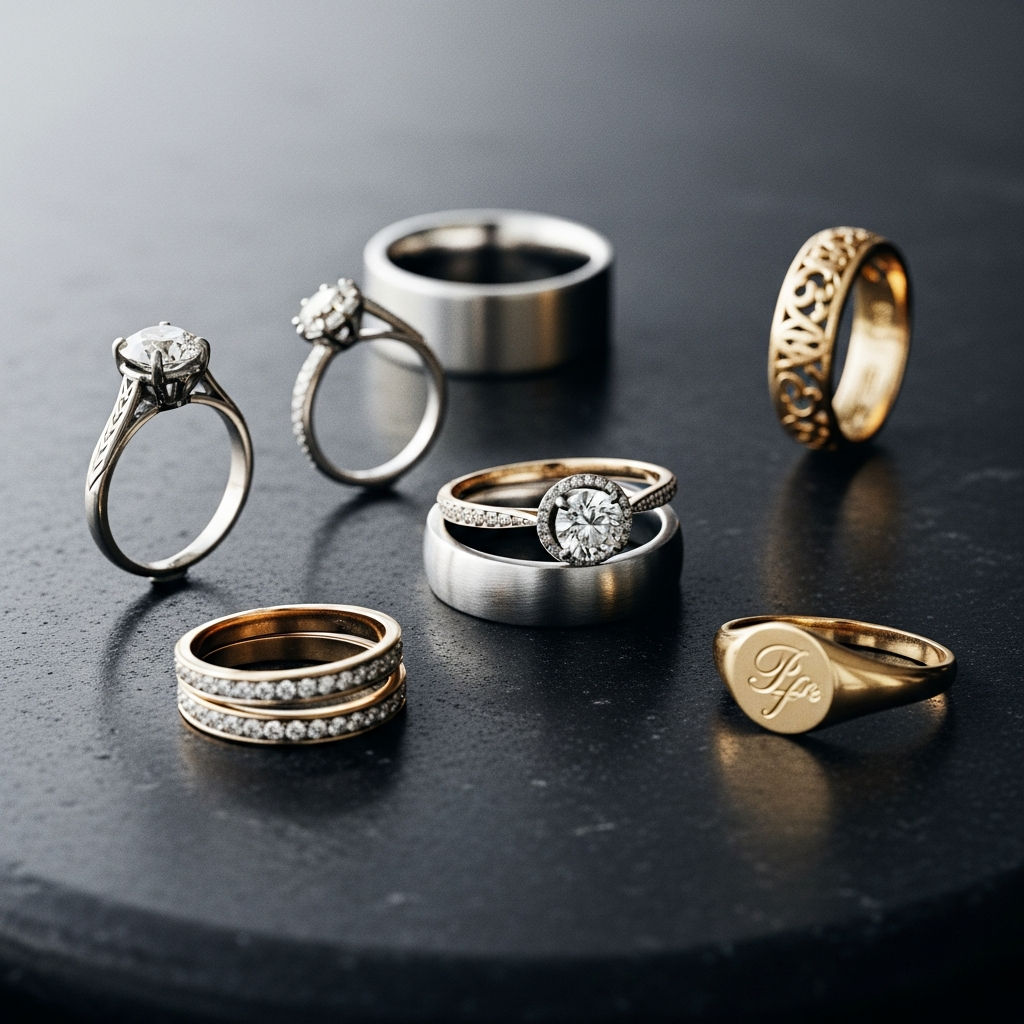
- Signet Rings: Used by royalty and nobility to seal official documents with wax.
- Religious Rings: Worn by clergy to signify their devotion to their faith.
- Mourning Rings: Common in the Victorian era to commemorate a deceased loved one.
- Class Rings: A modern tradition signifying graduation and academic achievement.
Popular Types of Rings for Every Occasion
When shopping for rings, the variety can be overwhelming. Understanding the different categories can help you narrow down the perfect choice for your needs.
1. Engagement Rings
The engagement ring is perhaps the most iconic type of ring. Traditionally featuring a central diamond, modern engagement rings now incorporate a variety of gemstones like sapphires, emeralds, and moissanite. The style of the ring—whether it is a classic solitaire, a vintage-inspired halo, or a contemporary three-stone setting—reflects the wearer’s personality and the couple’s unique story.
2. Wedding Bands
Exchanged during the marriage ceremony, wedding bands represent an unbreakable bond. While many choose simple gold or platinum bands, others opt for “eternity bands” encrusted with small diamonds that circle the entire finger. Men’s wedding rings have also evolved, moving beyond traditional gold to include rugged materials like tungsten and titanium.
3. Promise Rings
A promise ring is a precursor to an engagement ring. It signifies a serious commitment between two people, often given when a couple is too young to marry or is waiting for a specific milestone. They are generally more modest in design than engagement rings but carry deep emotional weight.
4. Fashion and Cocktail Rings
Fashion rings are designed to be worn as accessories rather than symbols of status or commitment. Cocktail rings, specifically, are oversized, bold pieces meant to make a statement. These are often worn on the middle or index finger and feature large colorful gemstones or intricate metalwork.
Choosing the Right Metal for Your Ring
The metal you choose for your ring affects its durability, price, and appearance. Here are the most common options available today:
Yellow, White, and Rose Gold
Gold remains the gold standard for rings. It is measured in karats (k), with 14k and 18k being the most common for jewelry.
- Yellow Gold: The classic, timeless choice that complements warm skin tones.
- White Gold: Created by mixing gold with white metals like nickel or palladium; it offers a sleek, modern look.
- Rose Gold: A romantic, pink-hued alloy created by adding copper to gold.
Platinum
Platinum is a rare, heavy, and extremely durable metal. It is naturally white and does not require replating like white gold does. Because of its density and purity, it is the most expensive of the precious metals but is ideal for those with sensitive skin due to its hypoallergenic properties.

Sterling Silver
For those looking for beautiful rings on a budget, sterling silver is an excellent choice. While it is softer than gold and can tarnish over time, its affordability and bright luster make it a favorite for fashion jewelry.
Alternative Metals
Modern jewelry design has embraced alternative metals like Tungsten, Titanium, and Cobalt. These are incredibly scratch-resistant and durable, making them popular choices for men’s wedding bands and people with active lifestyles.
Understanding Gemstones and Settings
The “soul” of many rings lies in the gemstone. While diamonds are the most popular due to their hardness (scoring a 10 on the Mohs scale), other stones offer unique colors and meanings. For example, Rubies symbolize passion, while Aquamarines represent peace.
Common Ring Settings
The setting is how the stone is secured to the band. Popular settings include:
- Prong Setting: Uses small metal claws to hold the stone, allowing maximum light to enter the gem.
- Bezel Setting: Encircles the stone with a thin metal rim, offering superior protection for the gem.
- Pavé Setting: “Paves” the band with tiny diamonds for a continuous sparkle.
- Channel Setting: Places stones side-by-side between two metal walls, ideal for wedding bands.
How to Find Your Perfect Ring Size
A ring should fit comfortably—snug enough not to fall off, but loose enough to slide over your knuckle with some resistance. To find your size at home:
- Wrap a piece of string or a thin strip of paper around the base of your finger.
- Mark the point where the ends meet.
- Measure the string or paper in millimeters and compare it to a standard ring size chart.
Pro tip: Measure your finger at the end of the day when your hands are warm, as fingers tend to shrink in the cold.
Caring for Your Rings
To keep your rings sparkling for a lifetime, proper maintenance is essential. Regular cleaning at home using mild dish soap and a soft toothbrush can remove oils and dirt. However, professional inspections are recommended once a year to ensure that prongs are secure and stones aren’t loose.
Always remove your rings before engaging in heavy lifting, gardening, or using harsh chemicals like bleach, which can damage precious metals and certain gemstones.
Conclusion: The Timeless Appeal of Rings
Whether you are searching for a diamond engagement ring to start a new chapter or a simple silver band to express your personal style, rings are more than just metal and stone. They are wearable memories and symbols of our most cherished values. By understanding the history, materials, and styles available, you can choose a ring that not only looks beautiful but also stands the test of time.
Investing in a high-quality ring is an investment in a piece of art that can be passed down through generations. Take your time, do your research, and select a piece that truly speaks to you.