“`html
The Ultimate Guide to Diamonds: Nature’s Most Brilliant Masterpiece
For centuries, the diamond has stood as the ultimate symbol of love, resilience, and luxury. Known as the hardest natural substance on Earth, this gemstone is more than just a piece of high-end jewelry; it is a geological marvel. From the depths of the Earth’s mantle to the display cases of world-renowned jewelers, the journey of a diamond is as fascinating as its sparkle.
In this comprehensive guide, we explore everything you need to know about diamonds—from their scientific composition and the famous “4Cs” of grading to the modern rise of lab-grown alternatives and their vital roles in industry.
What is a Diamond? The Science of Carbon
A diamond is a solid form of the element carbon with its atoms arranged in a crystal structure called diamond cubic. At the molecular level, each carbon atom is bonded to four others in a tetrahedral shape, creating an incredibly strong and rigid bond. This unique arrangement is what gives diamonds their legendary hardness, ranking a perfect 10 on the Mohs scale.
Natural diamonds are formed deep within the Earth—roughly 90 to 150 miles below the surface. They require extreme conditions: temperatures reaching 2,200 degrees Fahrenheit and crushing pressures of approximately 725,000 pounds per square inch. These stones are eventually brought to the surface through volcanic eruptions via kimberlite pipes, where they are later mined.
Understanding the 4Cs: The Global Standard for Diamond Quality
When evaluating a diamond’s beauty and value, the industry relies on the 4Cs, a grading system established by the Gemological Institute of America (GIA). Understanding these criteria is essential for anyone looking to invest in a gemstone.
1. Cut: The Factor of Brilliance
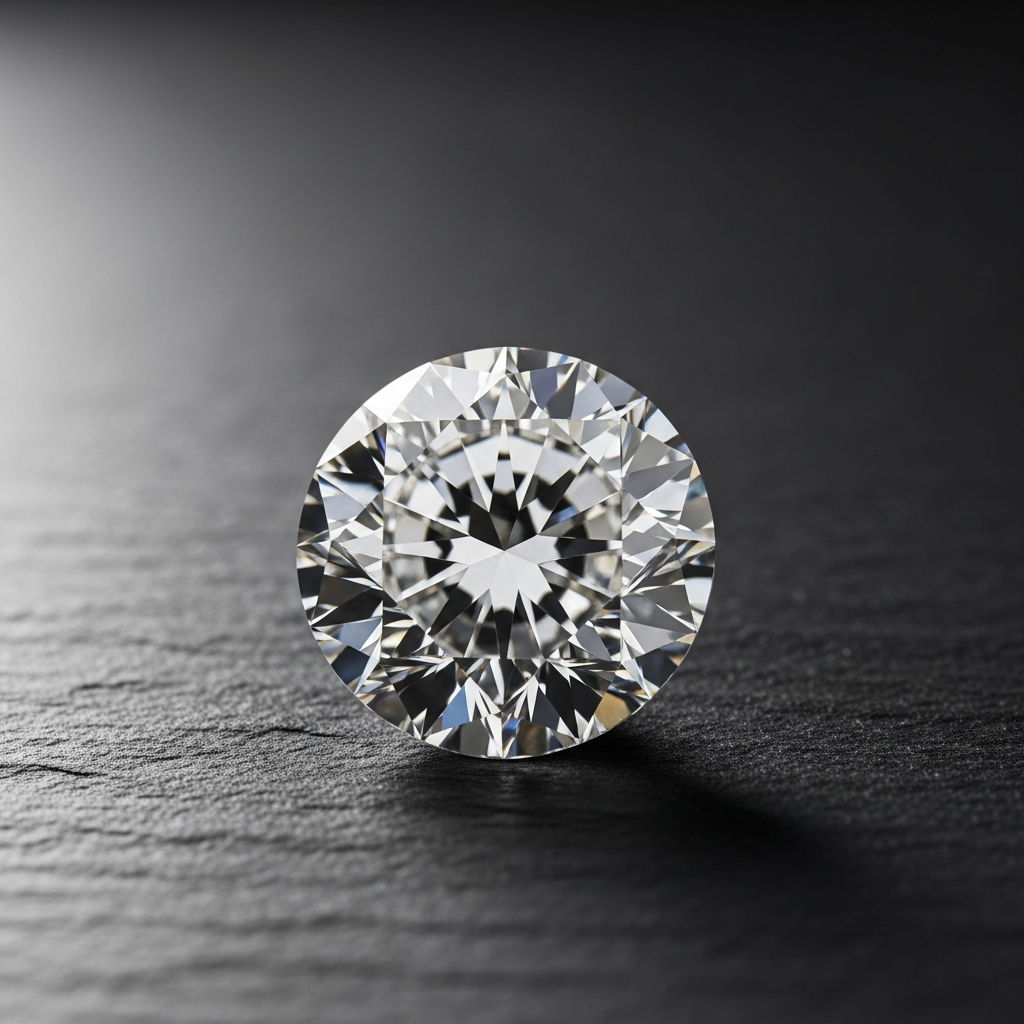
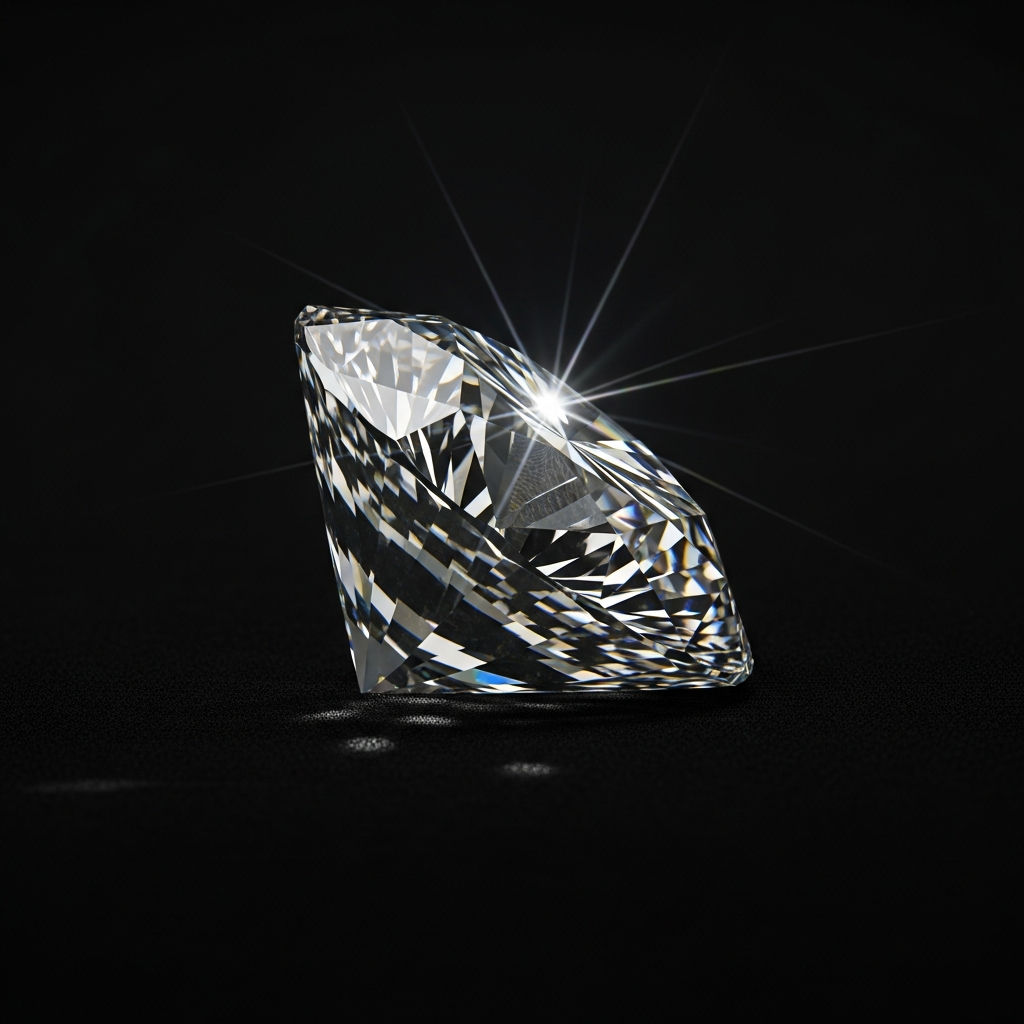
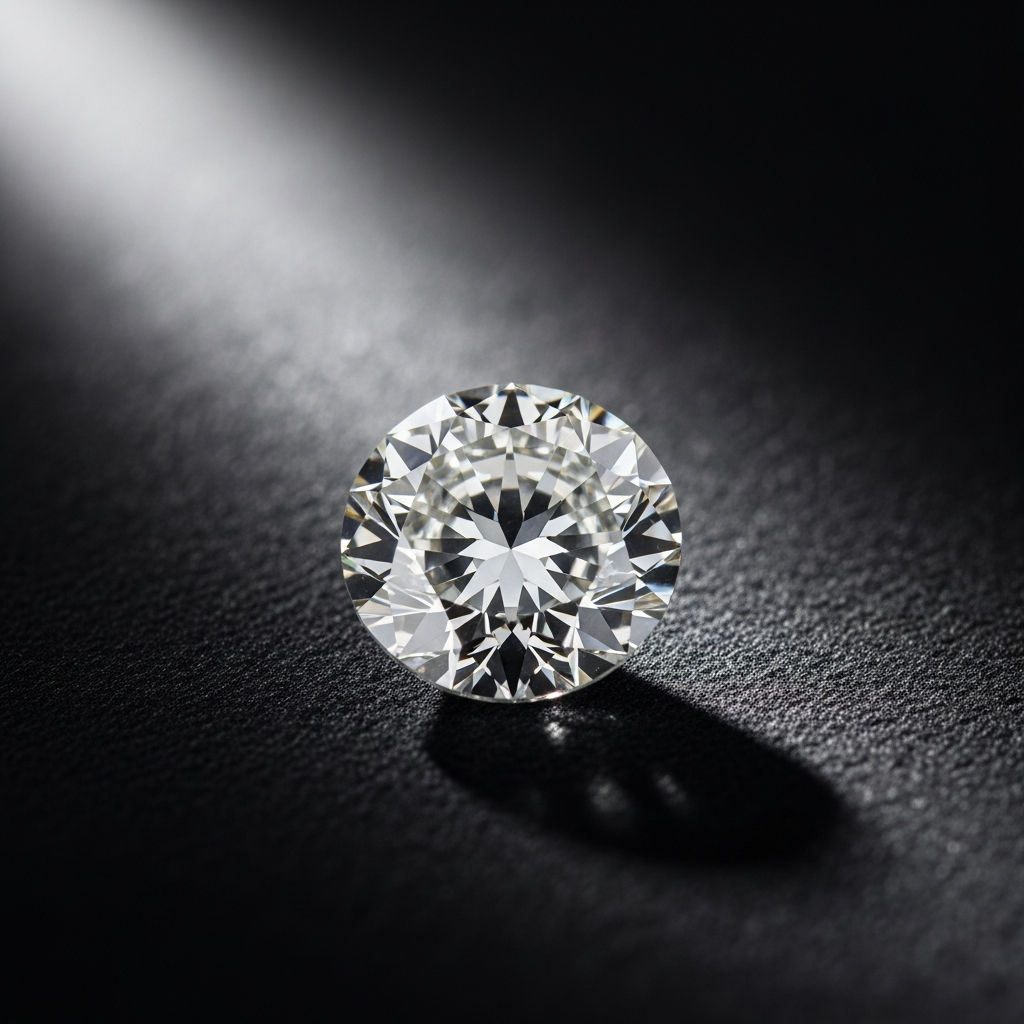
The cut is arguably the most important of the 4Cs. It does not refer to the shape (e.g., round, pear, oval) but rather how well a diamond’s facets interact with light. A well-cut diamond reflects light internally from one facet to another and disperses it through the top, creating that signature “fire.”
- Excellent: Maximum light return and brilliance.
- Fair/Poor: Light leaks out the bottom or sides, making the stone look dull.
2. Color: The Absence of Hue
In white diamonds, the “best” color is actually a lack of color. The GIA scales diamonds from D (completely colorless) to Z (light yellow or brown).
- D-F: Colorless (highest value).
- G-J: Near colorless (looks white to the naked eye).
- K-Z: Noticeable tint.
3. Clarity: Evaluating Internal Flaws
Diamonds are formed under intense pressure, which often results in internal “inclusions” or surface “blemishes.” Clarity grades measure the size and visibility of these imperfections under 10x magnification. Grades range from Flawless (FL) to Included (I1-I3).
4. Carat: The Measure of Weight
Carat refers to the diamond’s physical weight, not its size. One carat is equivalent to 200 milligrams. While a higher carat weight usually means a higher price, two diamonds of equal weight can have vastly different values depending on their Cut, Color, and Clarity.
Natural vs. Lab-Grown Diamonds: What’s the Difference?
One of the biggest shifts in the modern jewelry market is the emergence of lab-grown diamonds. For consumers, choosing between the two often comes down to budget and personal philosophy.
Lab-Grown Diamonds
Lab-grown diamonds are created in controlled laboratory environments using technologies like Chemical Vapor Deposition (CVD) or High Pressure High Temperature (HPHT).
- Chemical Composition: They are chemically, physically, and optically identical to natural diamonds.
- Cost: Generally 60% to 80% less expensive than natural diamonds.
- Ethics: Often marketed as a more sustainable and conflict-free alternative.
Natural Diamonds
Natural diamonds carry the prestige of rarity and billions of years of history.
- Resale Value: Historically, natural diamonds retain a higher resale value compared to lab-grown stones.
- Rarity: Since the Earth’s supply of diamonds is finite, they are often viewed as a better long-term investment.
Beyond the Ring: Industrial Applications of Diamonds
While diamonds are synonymous with engagement rings, only about 20% of the world’s diamonds are used in jewelry. The remaining 80%—referred to as “industrial grade”—are used in various sectors due to their incredible physical properties.
- Cutting and Drilling: Diamond-tipped tools are used to cut through stone, concrete, and even other diamonds.
- Medical Industry: Diamond scalpels are used in precise surgeries, such as eye surgery, because they can be sharpened to an incredibly fine edge.
- Technology: Because diamonds have high thermal conductivity, they are used to dissipate heat in high-performance electronics and lasers.
- Audio Equipment: High-end speakers often use diamond domes to provide high-frequency sound without distortion.
Ethical Sourcing and the Kimberley Process
The diamond industry has historically faced criticism regarding “blood diamonds”—stones mined in war zones to finance conflict. To combat this, the Kimberley Process Certification Scheme (KPCS) was established in 2003. This international initiative ensures that over 99% of diamonds in the global market are conflict-free. When purchasing a diamond today, consumers should always ask for certification to ensure the stone was ethically sourced.
How to Buy a Diamond: A Quick Checklist
Purchasing a diamond is a significant emotional and financial investment. To ensure you get the best value, follow these steps:
- Set a Budget: Forget the “three months’ salary” rule. Choose a budget that is comfortable for your financial situation.
- Prioritize Cut: If you want the most sparkle, invest more in the Cut and slightly less in Clarity or Color.
- Insist on Certification: Never buy a diamond without a grading report from a reputable lab like the GIA or IGI.
- Check the Lighting: Look at the diamond under different lighting conditions (natural sunlight, office light) to see how it truly performs.
- Choose the Right Metal: The color of the setting matters. A yellow gold band can hide a lower color grade (like J or K), while a platinum band requires a higher color grade (D-G) to look its best.
The Symbolism and Future of Diamonds
The word diamond is derived from the Greek word “adamas,” meaning invincible or indestructible. This namesake is why diamonds have become the standard for wedding anniversaries and engagements—representing a bond that cannot be broken.
As we look to the future, the diamond industry continues to evolve. With advancements in lab-grown technology and a stronger focus on carbon-negative mining practices, diamonds remain at the forefront of both fashion and technological innovation. Whether it is a natural stone from deep within the Earth or a precision-engineered lab crystal, the diamond’s allure is unlikely to fade.
Conclusion
Diamonds are truly one of nature’s most spectacular achievements. They bridge the gap between ancient geology and modern luxury, serving as both a hard-working industrial tool and a timeless romantic gesture. By understanding the 4Cs, the origins of the stone, and the importance of ethical sourcing, you can appreciate these “shards of stars” for the incredible treasures they are.
“`