
“`html
The Ultimate Guide to Diamonds: History, Science, and Value
Diamonds have long been the world’s most coveted gemstone. Known for their unmatched brilliance and legendary hardness, they have served as symbols of eternal love, signs of immense wealth, and essential tools in modern industry. But what exactly is a diamond, and why does it hold such a prestigious place in human culture?
In this comprehensive guide, we explore the fascinating world of diamonds—from their geological formation deep within the Earth to the complex grading systems used by jewelers today. Whether you are looking to purchase an engagement ring or are simply curious about the science of carbon, this article covers everything you need to know.
What is a Diamond?
At its most basic level, a diamond is a solid form of the element carbon with its atoms arranged in a crystal structure called diamond cubic. Under extreme pressure and temperature, carbon atoms bond in a way that creates the hardest known natural substance on Earth. This unique atomic structure gives diamonds their physical properties, including their high refractive index (which causes “sparkle”) and their incredible thermal conductivity.
How Diamonds Are Formed: Nature’s Masterpiece
Natural diamonds are forged over billions of years. They are created approximately 90 to 150 miles below the Earth’s surface in the mantle. The process requires two specific conditions:
- Intense Pressure: At least 45 to 60 kilobars.
- Extreme Heat: Temperatures ranging from 900 to 1,300 degrees Celsius.
These diamonds are eventually brought closer to the surface through deep-seated volcanic eruptions. The magma from these eruptions cools to form rocks known as Kimberlite or Lamproite, which act as the primary sources for diamond mining today. Because of this volatile journey, most natural diamonds are estimated to be between 1 billion and 3.5 billion years old.
The 4Cs: How Diamond Quality and Value Are Measured
When it comes to evaluating the quality and price of a diamond, the industry uses a globally accepted standard known as the 4Cs. Established by the Gemological Institute of America (GIA) in the 1950s, these criteria ensure that consumers and professionals have a universal language for diamond grading.
1. Cut
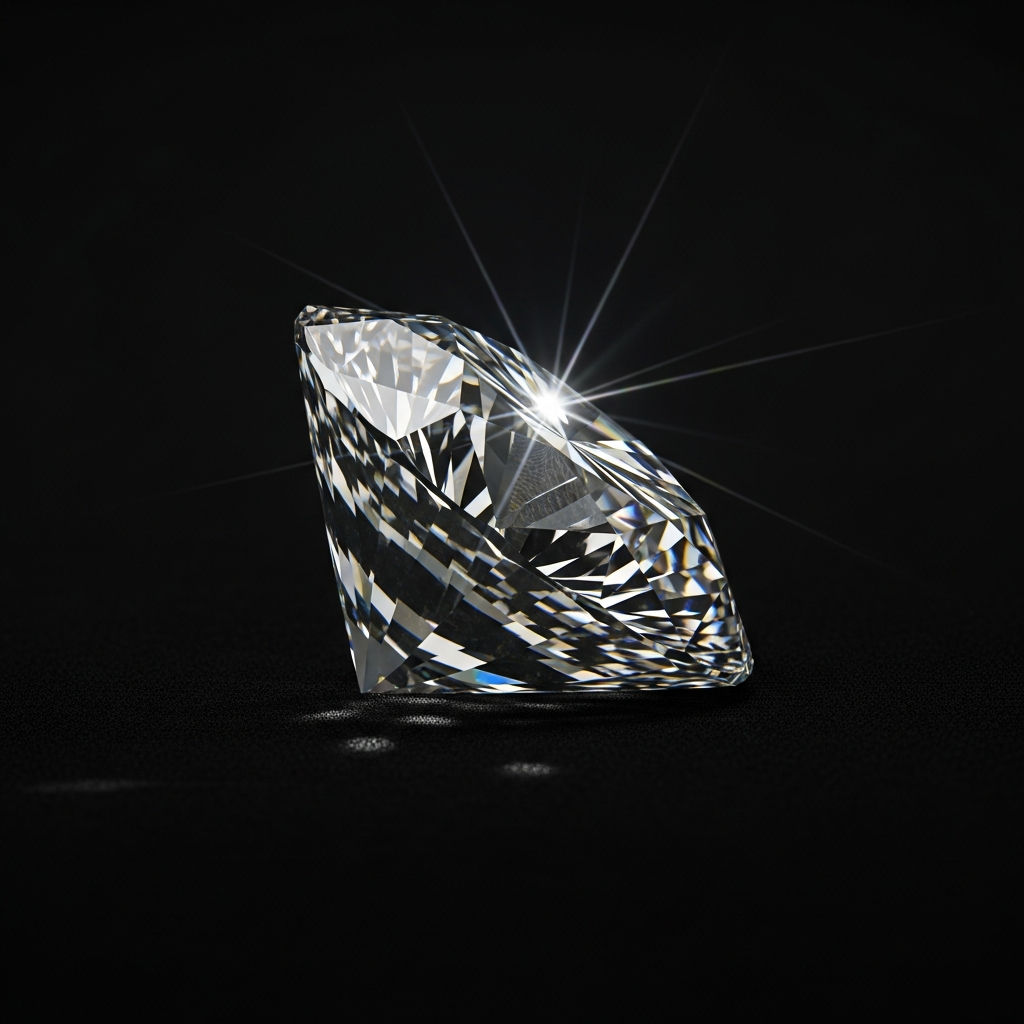
Often considered the most important of the 4Cs, the “Cut” does not refer to the shape of the diamond but rather how well its facets interact with light. A well-cut diamond reflects light internally from one facet to another and disperses it through the top, creating that signature “fire.”
- Excellent: Maximum brilliance and fire.
- Good/Fair: Some light leaks out of the sides or bottom.
- Poor: The diamond appears dull or “dead.”
2. Color
The color of a diamond is graded on a scale from D (colorless) to Z (light yellow or brown). Truly colorless diamonds are the rarest and most expensive. Most diamonds used in jewelry are “near-colorless,” containing trace amounts of nitrogen that create a slight yellowish tint invisible to the untrained eye.
3. Clarity
Clarity refers to the absence of “inclusions” (internal flaws) and “blemishes” (external flaws). Because diamonds are formed under extreme pressure, it is rare to find one that is perfectly clean. The grading scale ranges from FL (Flawless) to I (Included). Most buyers look for “eye-clean” diamonds, where flaws cannot be seen without magnification.
4. Carat Weight
Carat is the measure of how much a diamond weighs. One carat is equal to 200 milligrams. While a larger carat weight usually means a higher price, two diamonds of equal weight can have vastly different values depending on their Cut, Color, and Clarity.

Popular Diamond Shapes and Styles
While “cut quality” is a technical grade, “shape” is a matter of personal style. The shape of a diamond can drastically change the appearance of a piece of jewelry.
- Round Brilliant: The most popular shape, designed for maximum light return.
- Princess Cut: A square shape that offers a modern, edgy look with high brilliance.
- Oval: Elegant and elongated, making the finger look slimmer.
- Emerald Cut: A rectangular shape with “step cuts” that emphasize clarity over sparkle.
- Pear Shape: A teardrop design that combines the round and marquise styles.
The Rise of Lab-Grown Diamonds
In recent years, lab-grown diamonds have disrupted the traditional jewelry market. It is important to note that lab-grown diamonds are chemically, physically, and optically identical to mined diamonds. They are not “fakes” like cubic zirconia or moissanite.
There are two primary methods for creating diamonds in a lab:
- HPHT (High Pressure High Temperature): Mimics the Earth’s natural diamond-growing conditions using a press.
- CVD (Chemical Vapor Deposition): Uses a carbon-rich gas in a vacuum chamber to “grow” diamond layers on a seed crystal.
The main advantages of lab-grown diamonds are their lower price point (often 60-80% cheaper than natural diamonds) and the fact that they require no mining, making them an attractive option for environmentally conscious consumers.
Beyond Jewelry: Industrial Applications
While we mostly associate diamonds with luxury, only about 20% of the diamonds mined are of gem quality. The remaining 80% are used for industrial purposes. Because diamonds are the hardest material on the Mohs scale (a 10 out of 10), they are indispensable in various sectors:
- Cutting and Drilling: Diamond-tipped drill bits are used in oil exploration and mining.
- Abrasives: Diamond dust is used to polish other gemstones and high-precision tools.
- Technology: Because of their thermal conductivity, diamonds are used as “heat sinks” in high-performance electronics to prevent overheating.
- Medicine: Scalpels tipped with diamonds are used in delicate eye and neurological surgeries for ultra-precise incisions.
Ethical Sourcing and the Kimberley Process
In the late 20th century, the diamond industry faced scrutiny over “conflict diamonds”—stones sold to fund rebel movements and civil wars. To combat this, the Kimberley Process Certification Scheme (KPCS) was established in 2003. This international initiative prevents conflict diamonds from entering the mainstream rough diamond market. Today, over 99% of diamonds are sourced from conflict-free regions, and many brands go further by providing “blockchain” tracking to prove the origin of each stone.
Conclusion: The Timeless Appeal of the Diamond
Whether it is a natural stone formed billions of years ago or a high-tech lab creation, the diamond remains a marvel of the natural world. Its combination of incredible strength and breathtaking beauty ensures that it will remain the gemstone of choice for generations to come.
When purchasing a diamond, remember that beauty is subjective. While the 4Cs provide a roadmap for value, the “perfect” diamond is ultimately the one that speaks to your personal style and fits within your budget. By understanding the science and grading behind these stones, you can make an informed decision and invest in a piece of Earth’s history that will last a lifetime.
“`